Search

Driving Notes

The Official Blog of WNZR's Afternoon Drive

Category

Who Knew Wednesday

Fun facts about Valentine’s Day

  • About 1 billion Valentine’s Day cards are exchanged in US each year. That’s the largest seasonal card-sending occasion of the year, next to Christmas.
  • Women purchase 85% of all valentines.
  • In order of popularity, Valentine’s Day cards are given to teachers, children, mothers, wives, sweethearts and pets.
  • Parents receive 1 out of every 5 valentines.
  • About 3% of pet owners will give Valentine’s Day gifts to their pets.
  • Valentine’s Day and Mother’s Day are the biggest holidays for giving flowers.
  • Worldwide, over 50 million roses are given for Valentine’s Day each year.
  • California produces 60 percent of American roses, but the vast number sold on Valentine’s Day in the United States are imported, mostly from South America. Approximately 110 million roses, the majority red, will be sold and delivered within a three-day time period.
  • 73% of people who buy flowers for Valentine’s Day are men, while only 27 percent are women.
  • Men buy most of the millions of boxes of candy and bouquets of flowers given on Valentine’s Day.
  • In the Middle Ages, young men and women drew names from a bowl to see who their valentines would be. They would wear these names on their sleeves for one week. To wear your heart on your sleeve now means that it is easy for other people to know how you are feeling.
  • The Italian city of Verona, where Shakespeare’s lovers Romeo and Juliet lived, receives about 1,000 letters addressed to Juliet every Valentine’s Day.
  • Richard Cadbury invented the first Valentines Day candy box in the late 1800s.
  • Alexander Graham Bell applied for his patent on the telephone, an “Improvement in Telegraphy”, on Valentine’s Day, 1876.
  • Amongst the earliest Valentine’s Day gifts were candies. The most common were chocolates in heart shaped boxes.c

AS PROMISED, here are the “clean” Winter Olympics-themed Valentine’s love lines you can try out on your significant other (my daughter would call these ‘Dad’ jokes):

  • Are you an ice skater? You’ve got a great figure.
  • I’m no curler, but I think I could sweep you off your feet!
  • Hey, are you a skiing event, ‘cause I would travel cross-country for you!
  • My gold medal might be shiny, but it looks like a dull penny compared to that sparkle in your eyes.
  • Your legs must be tired because you’ve been speed skating through my mind all night.

Thanks for listening!
– Joe
Who Knew? Handwriting still matters!

Today we’re exploring the value of thank you’s…and the EXTREME value of the handwritten card or note.

In our digital age, the time and effort of a handwritten note is STILL valued.  Why?

John Coleman’s article in the Harvard Business Review from 2013 still resonates.  Read the full article here. He shares that:

  • Handwritten notes mean more because they cost more, as handwritten notes convey a deeper investment in your gratitude.
  • Handwritten notes have permanence and have nostalgic value!

This 2017 Nancy Olsen article in Forbes also gives 5 great reasons to hand write your card.  She says:

  • Sometimes it seems that manners are teetering on the edge of extinction, so it’s the right thing to do!
  • It sets you apart
  • Gratitude is good for the brain – we are wired to best express ourselves without electronic communication

    We did a handwriting trivia question today!
    “When writing on an unlined sheet of paper, what instrument can you use to ensure a straight edge and lines?”
    The answer? A T-Square!

    Congrats to Jennie from Howard who guessed correctly!

Thanks for listening!
– Joe and Lilly


Backwards Day with the Afternoon Drive!

Hello! Or, should I say goodbye? It’s Backward Day!

January 31st honors everything backward.  National Backward Day is an opportunity to reverse our ways, our direction or simply our shirt. There are many ways to celebrate this fun day, so just let your imagination be your guide. This day is very popular with school-aged kids, but there is no age limit on who can participate in all of the backward fun.

Here’s a few fun ways to celebrate!

  • Wear your outfit backwards and if you can, talk and write backwards.
  • Go to bed in the morning and start working in the evening, have dinner in the morning and breakfast in the evening, and have dessert first during all your meals.
  • Talk to people with your back towards them. Just make sure you let them know you are celebrating Backwards Day, so they don’t think you are rude.
  • Say goodbye to people when you meet them, and hello when you depart.
  • Play a board game from the finish line to the start.

Happy National Backward Day!
Thanks for Listening!
– Lilly

Who Knew? Peanut Butter edition…

Today is Peanut Butter Day, so we’re sharing fun facts from the National Peanut Board.

The link to the article is HERE, but some of the highlights include:

  1. It takes about 540 peanuts to make a 12-ounce jar of peanut butter.
  2. By law, any product labeled “peanut butter” in the United States must be at least 90 percent peanuts
  3. The average peanut farm in the U.S. is 100 acres.
  4. Two peanut farmers have been elected president of the USA – Thomas Jefferson and Jimmy Carter.
  5. There are six cities in the U.S. named Peanut: Peanut, California; Lower Peanut, Pennsylvania; Upper Peanut, Pennsylvania; Peanut, Pennsylvania, Peanut, Tennessee; and Peanut West Virginia.

Some fun peanut butter questions to ask your friends…

  • crunchy or creamy?
  • what’s your favorite jelly or jam on a PB&J?
  • crust-on or crust-off?
  • white or wheat bread with PB?  Or crackers?  Pretzels?

Today’s trivia question to win the Troyer’s of Apple Valley $5 certificate was:

Where was Thomas Jefferson’s peanut farm?
Answer: Monticello, Virginia

Congratulations to Erinn of Mount Vernon!

Thanks for listening!
– Joe and Lilly

WinterJam Who Knew!

Good afternoon! I’ m back. I still exist. haha. Just doing a lot of schoolwork and classes.

Today on the show, we talked all about WinterJam 2018!
Do you want to hear from some of the WinterJam artists?
You can do that!
Click the links below!

Jason Roy of Building 429
Comedian John Crist
WinterJam Artist KB
Eddie Carswell of Newsong

If you would like more information about WinterJam 2018 including tour stops, performing artists and ticket information, click here!

Congratulations to Gloria from Mt. Vernon who won our WinterJam ticket/Troyer’s Giveaway today!

Our WinterJam question today was…
“How many Dove awards has Kari Jobe won?”
Kari has won 3 Dove Awards!

Thanks for listening!
– Lilly

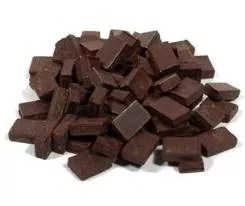
Bittersweet Chocolate: Who-Knew?

chocolate

Today is a bittersweet day, simply because it’s bittersweet chocolate day! Yes! Every year on January 10th, we celebrate Bittersweet Chocolate Day! So, now that you know that, did you also know that November 7th is National Bittersweet Chocolate with Almonds?
Fun, right?

Here are some more fun facts about Bittersweet Chocolate!

  • In America, bittersweet chocolate starts around 70% or more of cacao. Higher percentages of cacao lower the amount of sugar in your chocolate, but usually raise the amount of cocoa butter used. This ratio of cacao to sugar determines if it is bittersweet, semi-sweet, or sweetened.  If you decide to add fine dark chocolate to your routine, make sure it’s true dark chocolate. Sometimes milk chocolate will have food coloring to make it look like dark chocolate. Checking the cacao percentage is probably best.
  • When you watch movies, Hollywood has some pretty neat tricks of faking things like food and blood. But what about faking blood with food? Chocolate syrup was used for blood in the famous 45 second shower scene in Alfred Hitchcock’s movie, “Psycho” which actually took 7 days to shoot.
  • There are about 5 to 10 milligrams of caffeine in one ounce of bittersweet chocolate, 5 milligrams in milk chocolate, and 10 milligrams in a six-ounce cup of cocoa; by contrast, there are 100 to 150 milligrams of caffeine in an eight-ounce cup of brewed coffee. You would have to eat more than a dozen chocolate bars, for example, to get the amount of caffeine in one cup of coffee.
  • A single chocolate chip provides sufficient food energy for an adult to walk 150 feet; hence, it would take about 35 chocolate chips to go a mile, or 875,000 for an around-the-world hike.
  • Due to its high cocoa content, bittersweet chocolate can be kept for years if stored in the correct conditions.
  • The Aztecs loved and valued the cacao bean so highly that they used it as currency during the height of their civilization.
  •  Dutch-process cocoa is additionally processed with alkali to neutralize its natural acidity. Natural cocoa is light in color and somewhat acidic with a strong chocolate flavor.
  • Natural cocoa is commonly used in recipes that also use baking soda; as baking soda is an alkali, combining it with natural cocoa creates a leavening action that allows the batter to rise during baking. Dutch cocoa is slightly milder in taste, with a deeper and warmer color than natural cocoa.
  • Dutch-process cocoa is frequently used for chocolate drinks such as hot chocolate due to its ease in blending with liquids.

Thanks for listening!
– Joe and Lilly

Festival of Sleep Who Knew!

Welcome to the first Who-Knew Wednesday of 2018!
Today, we’re celebrating the Festival of sleep!

The Festival of Sleep day was founded by someone who had a profound and deep love of sleep. Sleep is a basic human function, and helps our bodies to regain energy for the next day, keeping our mind alert and ready for action. During the holidays, things can get crazy, so this holiday was created to let you catch up on those post-holiday Z’s.

Having a lack of sleep can be fatal to the human body and mind, effects caused by little to no sleep over an extended period of time are as follows.

Effect One: Lack of sleep in the modern world can cause people to get into vehicular accidents, which happen daily in large numbers.

Effect Two: Lack of sleep can in fact, dumb you down. As we all know, sleep plays a critical role in our thinking and learning processes. We also know that a lack of sleep hurts these cognitive processes in many ways. First, it impairs attention, alertness, concentration, reasoning, and problem solving. This makes it more difficult to learn efficiently. Secondly, sleep helps to retain memories of the day’s experience. Meaning that with a lack of sleep, we would not remember much of the previous day’s experiences. This makes sleep incredibly important for students, from those in college to those simply trying to learn a new language on their own.

Effect Three: Probably the most dangerous effect from having a long term lack of sleep is it can cause many and deadly health problems. Here are some examples of these problems.

• Heart Disease
• Heart Attack
• Heart Failure
• Irregular Heartbeat
• High Blood Pressure
• Stroke
• Diabetes

Here are some more fun facts about sleep!

  1. In general, most healthy adults need seven to nine hours of sleep a night. However, some individuals are able to function without sleepiness or drowsiness after as little as six hours of sleep. Others can’t perform at their peak unless they’ve slept ten hours.
  2. We naturally feel tired at two different times of the day: about 2:00 AM and 2:00 PM. It is this natural dip in alertness that is primarily responsible for the post-lunch dip.
  3. Sleep is just as important as diet and exercise.
  4. The higher the altitude, the greater the sleep disruption. Generally, sleep disturbance becomes greater at altitudes of 13,200 feet or more. The disturbance is thought to be caused by diminished oxygen levels and accompanying changes in respiration. Most people adjust to new altitudes in approximately two to three weeks.
  5. In general, exercising regularly makes it easier to fall asleep and contributes to sounder sleep. However, exercising sporadically or right before going to bed will make falling asleep more difficult.
  6. Snoring is the primary cause of sleep disruption for approximately 90 million American adults; 37 million on a regular basis.
  7. Scientists still don’t know — and probably never will — if animals dream during REM sleep, as humans do.
  8. People who don’t get enough sleep are more likely to have bigger appetites due to the fact that their leptin levels (leptin is an appetite-regulating hormone) fall, promoting appetite increase.

Thanks for listening!
-Lilly

Who Knew? – Christmas Songs!

Today on Who Knew Wednesday we shared some background on Christmas carols, hymns and songs.

ANGELS WE HAVE HEARD ON HIGH – today’s version by Casting Crowns

The lyrics were written in 1862 by James Chadwick, Bishop of Hexham and Newcastle in the Northern Province of England. It was inspired by a French song that follows the storyline of the ‘angels in the countryside’ singing to the shepherds.

‘Gloria in excelsis deo’ is Latin for ‘glory to God in the highest.’

Popular artists to record the song include: the Carpenters, Chris Tomlin, Mercy Me, Josh Groban, the Brian Setzer Orchestra and Sixpence None the Richer.

CHRISTMAS TIME IS HERE – today’s version by Erin O’Donnell

Most people recognize this song from the TV special ‘A Charlie Brown Christmas,’ which features the version by the Vince Guaraldi Trio.  It was released in 1965.  A second version of the song features vocals from children at St. Paul’s Episcopal Church in San Rafael, California.

TV historians note that the song and program made its debut on CBS Television on December 9, 1965. In the special, Charlie Brown finds himself depressed during the holiday season. Lucy suggests he direct a neighborhood Christmas play, but his best efforts are ignored and mocked by his peers. After Linus tells Charlie Brown about the true meaning of Christmas, Charlie Brown cheers up, and the Peanuts gang unites to celebrate the Christmas season.

In casting the characters, the producers hired child actors. The program’s soundtrack was also different: it featured a jazz score by pianist Guaraldi. Since there was no laugh track, the tone, pacing, music, and animation led both the producers and network to think the project would be a disaster preceding its broadcast.

BUT…A Charlie Brown Christmas received high ratings and acclaim from critics. It has since been honored with both an Emmy and Peabody Award.

JOY TO THE WORLD – today’s version by Avalon

This carol or hymn was written and published in 1719 by English writer Issac Watts. It is based mostly on Psalm 96: 11-12:

Let the heavens rejoice, let the earth be glad;
    let the sea resound, and all that is in it.
Let the fields be jubilant, and everything in them;
    let all the trees of the forest sing for joy.

It is the most published Christmas hymn in North America.

The origin of the music normally is credited to a tune called “Antioch’ and to George Frederick Handel since it resembles some choruses in the Messiah.

HOW GREAT OUR JOY – today’s version by Phillips, Craig and Dean

The origin of the text for “How Great Our Joy” is not known, but  The New Oxford Book of Carols says it may date back to as early as 1500 AD in Germany. In 1623, the tune was modernized and given an echo setting, where one group or individual repeats the lines of another. There is speculation that the song may have been designed for a Christmas play in which the shepherds’ lines were followed by an off-stage echo.

The first two stanzas of the song were translated by American born Theodore Baker (1851-1934) who studied music in Germany, and the tune is based on an arrangement by Hu­go Jüngst (1853-1923). In the U.S., we generally only sing between 2 and 4 of the original 9 stanzas:

While by my sheep, I watched at night
Glad tiding brought an angel bright

“For you,” he said, “this blessed morn
In Bethlehem a child is born.”

“Go where he lies within a stall
The infant Redeemer of us all.”

There in the stall he sleeping lay;
There by his side I longed to stay.

Sweetly he gazed into my face:
I in his hands my heart did place

Gently I kissed his tiny feet,
Which to my lips were honey-sweet.

Then to my home I made my way:
Yet still that Child with me did stay

Within my arms that Child did rest:
Oh! how my heart with love was blest.

Close shall I guard this darling Boy,
Thus shall my heart be filled with joy.

CHRISTMAS GIFT EXCHANGE:
today’s winners: Kristina from Fredericktown and Jessica from Mount Vernon!

Thanks for listening!
– Joe and Hannah

Who Knew Wednesday!

Today Joe and I talked about all the upcoming events in your community! (Spoiler they all contain Christmas)

Happy Christmas Bean is happening tonight in downtown Mount Vernon in Hunter Hall at Happy Bean from 7-9pm. There will be some discounts on coffee and a mug auction and all the proceeds will go to M2540, an MVNU campus ministry – Click HERE to find out more about M2540.

What better way to get into the Christmas mood than making memories with your family – Christmas trees, photo booths, kids crafts – all while supporting Food for The Hungry! To find out more about the Fredericktown Christmas Walk coming up on Saturday, December 2nd click HERE.

Speaking of Food for The Hungry! Its here, and in full swing! To find out more about what Food for the hungry is and how WNZR partners with this click HERE. 

Congrats to Amanda from Howard for winning our “Different kind of giveaway” – She won two tickets to the Mark Schultz and Love & the Outcome concert – To find out more about this concert click HERE.

Todays word of the day:

bludge
verb  –   BLUJ

Definition

1 : (chiefly Australia & New Zealand) to avoid work or responsibility
2 : (chiefly Australia & New Zealand) to get something from or live on another by imposing on hospitality or good nature : sponge


Thanks so much for the support of the Afternoon Drive! We deeply appreciate you! – Hannah Radke

Blog at WordPress.com.

Up ↑